
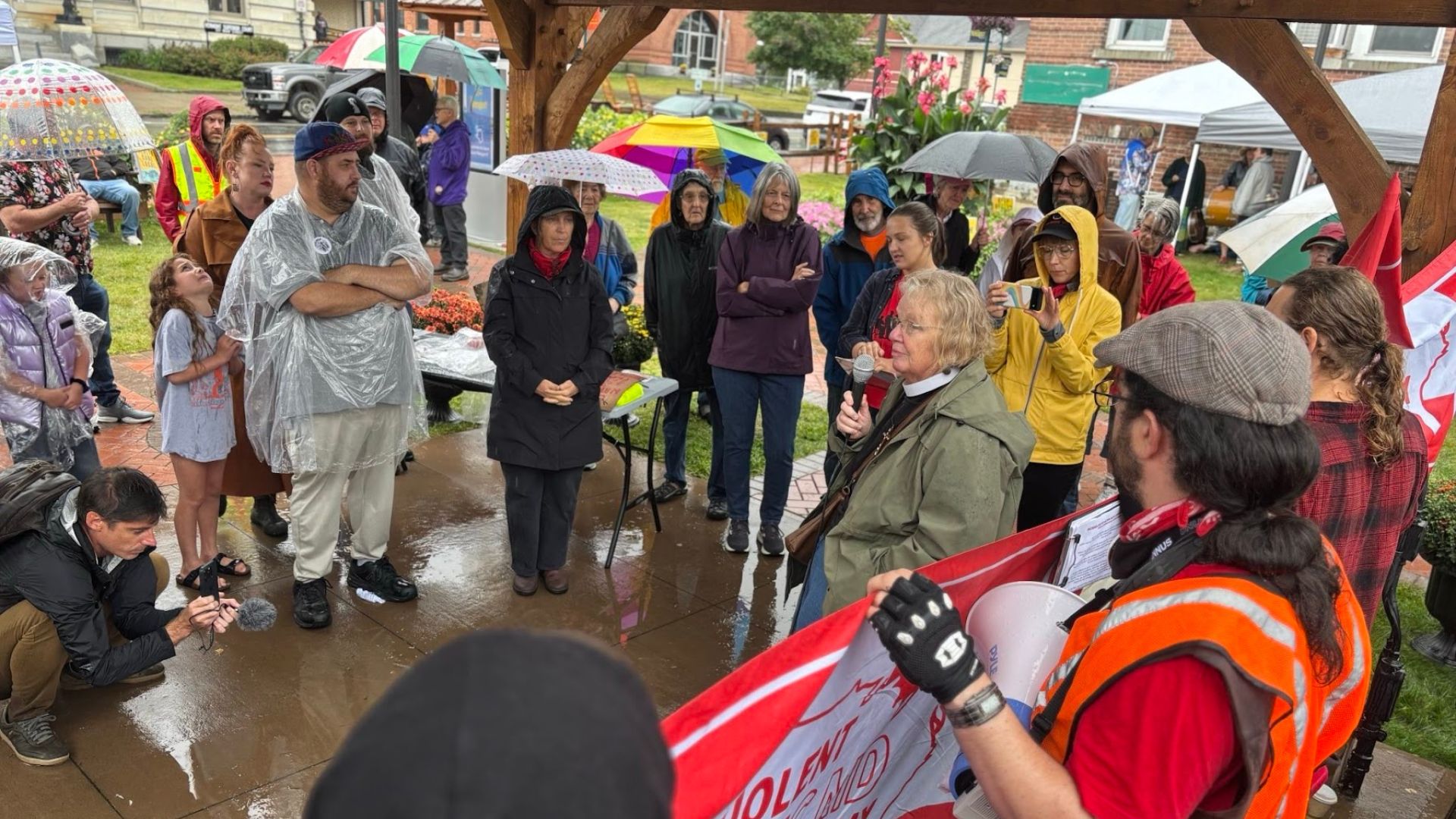

NEWPORT — Eighty people gathered in the rain Saturday in Newport to support healthcare access and oppose cuts to Medicaid and hospital services as part of a National Day of Action coordinated by the Nonviolent Medicaid Army.
The rally drew patients and healthcare workers from across the region and was organized by Northeast Kingdom Organizing, the Vermont Workers’ Center, Newport Downtown Development, and the NVMA.

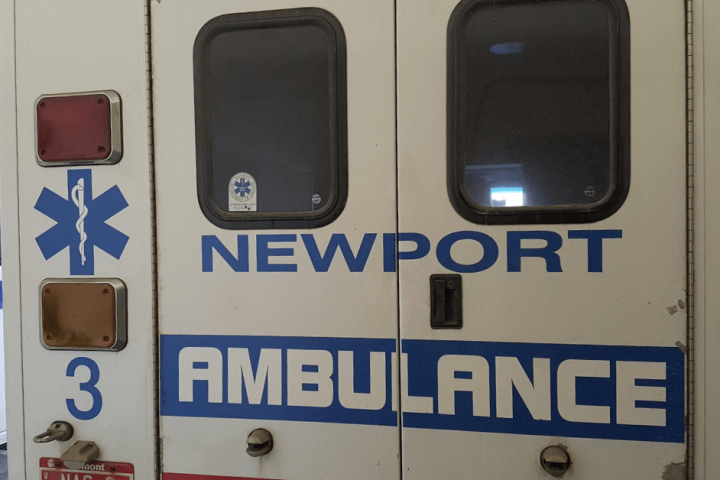
“Healthcare entities, including North Country Hospital can be at risk of losing essential services if Medicaid funding is cut,” said Dr. Monique Thompson, a Newport critical care paramedic. “This isn’t a bureaucratic or policy issue — it’s a real threat to our lives, to our neighbor’s lives, and especially to vulnerable populations. And we have a large percentage of vulnerable individuals in the Northeast Kingdom.”
Jason Larrabee, a Glover resident and leader with Northeast Kingdom Organizing, described how Medicaid supports his care for Stage II kidney disease.
“Medicaid is very helpful for me because I live with Stage II kidney disease,” Larrabee said. “I go to the hospital up here in North Country every month and they do tests to make sure my kidney disease isn’t progressing. Loss of Medicaid would really affect that. It also pays for my medications every month so I don’t have to pay out-of-pocket.”

Dr. Miriam Tatum, a retired pediatrician who worked in the Newport area for over 30 years, highlighted concerns about Dr. Dynasaur, Vermont’s children’s health insurance program.
“I learned what universal coverage for healthcare was like from this program,” she said. “And I am now very worried about Dr. Dynasaur. It’s not just because of cuts coming from legislation. It’s because we are in a system of delivering care that is fragmented and broken.”
Tracy Curtin, an educator who gave birth at Copley Hospital this spring, said hospital administrators are closing small birthing centers under the guise of quality control when the decisions are purely financial.
“Without Copley’s birthing center, and others like it, like in Newport, birthing parents are going to end up in the emergency department when their local birthing center is closed and the closest labor and delivery unit is over an hour away,” she said.
Denise Walton, a volunteer at Sid’s Pantry food shelf in Concord who receives Medicaid and SNAP benefits, connected healthcare access to broader issues of poverty and food security.
“I’m here to talk about human rights, and the right to healthcare, to food security, and to not have to live off of $6 a month after paying bills,” Walton said, referencing the recent closure of the Holland food shelf in Derby Line.
Dylan Stetson, a Waterford resident and Vermont Workers’ Center leader who lives with ME/CFS and POTS, described how Medicaid enabled his care after becoming disabled at age 19.
“I went from being a healthy, three-sport athlete to suddenly being disabled after getting a viral infection,” Stetson said. “Medicaid gave me the freedom to see multiple doctors and specialists when I was at my sickest. It covered the dozens of off-label treatments that private insurance would have denied. The only reason I am here today is because disabled people organize for each other, and because I had Medicaid to catch me when the private system would have let me die.”